

Most robotics projects don't fail on the model. They fail on the data — wrong type, wrong distribution, annotation that looked fine until training started. We've seen this pattern enough times at Unidata that it's become the first thing we ask about: not which architecture the team is running, but what their data actually looks like.
This guide covers the full picture: what categories of data robots learn from, how to collect them without wasting budget, how to annotate without quietly breaking your model, and how to build a pipeline that keeps improving after deployment. It's written for engineers and technical leads who know ML but haven't built a robotics data pipeline from scratch yet.
What Kind of Data Does a Robot Actually Need to Learn?

Start here before anything else: robotics training data is not one thing. A warehouse navigation robot and a dexterous manipulation arm need different data in different formats with different annotation requirements. Conflating them — treating all robot data as "sensor recordings to be labeled" — is one of the earliest and most expensive mistakes a project can make. You end up with a large, expensive dataset that doesn't match the training objective.
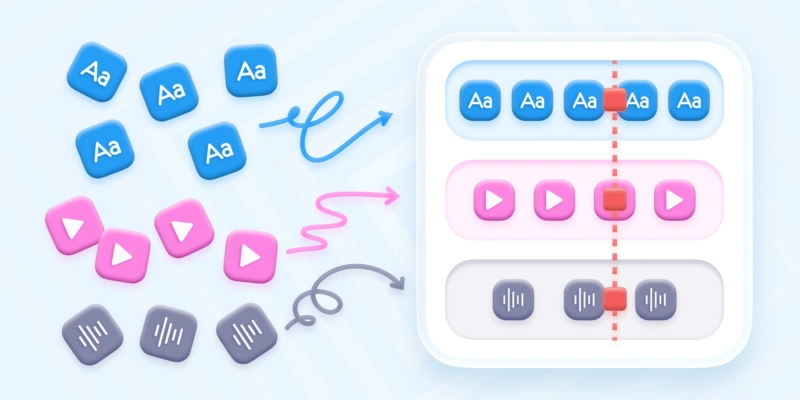
At the highest level, robot learning draws on three categories, each with a distinct role [1]:
Raw sensory data — camera frames, LiDAR point clouds, microphone audio — is the unprocessed output of the robot's hardware. This feeds perception model training: object detection, semantic segmentation, depth estimation. It's the most annotation-intensive category by volume.
Low-level cyclic data is the control loop signal stream: joint angles, motor torques, force readings, at sampling rates of 30–1000 Hz. It trains dynamics models and low-level controllers. Annotation requirements are lighter — the structure of the signal carries most of the information.
Task-level telemetry is a complete episode record — robot attempting a task from start to either completion or failure, everything logged. This is what imitation learning and reinforcement learning consume. It needs the densest annotation: task phase boundaries, success/failure labels, object state, sometimes operator intent.
A narrow industrial arm doing fixed pick-and-place probably only needs the first two. A manipulation robot learning from demonstrations needs all three. Getting this wrong before data collection starts means collecting the wrong thing at significant cost.
What Sensor Data Does a Robot Actually Learn From?
Each modality contributes something distinct to the perception stack — and each comes with annotation requirements that are worth understanding before you design your pipeline.

RGB cameras are the highest-volume, highest-annotation-effort modality: every frame needs object-level labels, often with pose. LiDAR and depth sensors generate 3D point clouds for spatial mapping and obstacle detection — annotation means 3D cuboids and polygon masks, not 2D bounding boxes. IMU and motion sensors capture position, orientation, and acceleration, which locomotion and aerial platforms depend on heavily. Tactile and force sensors record contact events and pressure distribution — the critical signal for anything involving precise grip. Audio sensors handle voice commands and acoustic context [2].
The production reality: most systems fuse at least two modalities. That fusion has a hard annotation implication. Labels across streams have to be temporally synchronized — a camera label applied to frame N has to correspond to the LiDAR scan from the same moment. A tool that handles one modality well but ignores timestamp alignment across the others doesn't just add work; it actively introduces noise into the training signal.
Once you know what sensor data the robot needs, the next question is where it comes from — and how much of it should be real vs. generated.
Real-World Data vs. Synthetic Data: Which Do You Need?

Both — but the question worth spending time on is what ratio and at what stage. This is where projects make budget decisions they can't easily reverse.
| Dimension | Real-World Data | Synthetic Data |
|---|---|---|
| Fidelity to deployment conditions | High | May miss real-world nuances |
| Cost at scale | Expensive | Cost-effective |
| Collection speed | Slow | Rapid |
| Edge case coverage | Limited | Simulatable on demand |
| Privacy risk | Present (especially indoors) | None |
| Ground truth labeling | Manual annotation required | Automatic |
The approach that holds up across the projects we support: synthetic data for volume and pre-training coverage, real-world data for fine-tuning and validation. Skewing heavily toward synthetic saves budget early but creates a debugging burden at hardware test. Skewing toward real-world collection limits your pre-training coverage and often runs out of budget before you have enough variety.
What Is the Sim-to-Real Gap and How Do You Close It?
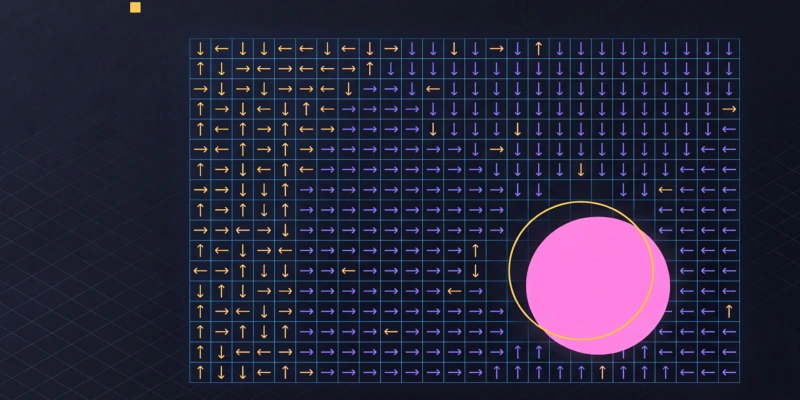
The sim-to-real gap is the performance drop between a policy that works in simulation and the same policy on physical hardware. It shows up consistently on first hardware tests, not before — which is part of what makes it expensive.
Why it happens: physics simulators approximate contact dynamics, friction, sensor noise, and lighting. They don't reproduce them [3]. A grasping policy trained entirely in sim will fail on real objects in characteristic ways: timing is off, approach angles don't account for joint compliance, reflective materials look nothing like the training distribution.

Five approaches that work in practice:
- Domain randomization — vary lighting, textures, physics parameters, and object positions during synthetic training so the policy generalizes to variation rather than fitting the simulator [4]
- Targeted real-world validation — collect a small set of real recordings specifically to measure which distribution gaps are largest; fix those gaps, not everything at once
- Transfer learning from synthetic checkpoints — initialize from a pre-trained synthetic model, then fine-tune on real data; the data volume required is substantially lower than training from scratch
- Hardware parameter matching — measure real actuator delay and friction coefficients, then match them in simulation before training starts, not after the gap appears on hardware
- Interleaved training — mix synthetic and real samples throughout training instead of running two sequential phases; this tends to produce smoother transfer than treating them as separate stages
None of these eliminates the gap entirely. Each one makes it smaller and more predictable.
How Do You Structure a Hybrid Pipeline in Practice?
Pre-training on synthetic data builds transferable representations — and that's what makes the hybrid approach work, not just the data mix ratio.
Networks pre-trained on large synthetic datasets build representations of geometry, object relationships, and physics that transfer across visual domains. When you fine-tune on real data, you're adjusting those representations toward the deployment distribution, not building them from scratch [5]. The result: you need significantly less real-world data than you would starting cold.
The operational challenge is format normalization. Synthetic and real datasets rarely share coordinate conventions, timestamp formats, frame rates, or label schemas. Without a normalization layer that reconciles all of these before training, you're feeding the model two incompatible distributions dressed up as one. It will underfit both.
For manipulation tasks: pre-train on synthetic until simulation performance plateaus, then point real-world collection budget at the specific scenarios where sim-to-real transfer is weakest. Simulation validation runs will show you exactly where those are.
How Should You Collect Robot Training Data?
The collection decision follows from the training objective — not from what's logistically convenient. We've seen projects define a collection approach first, execute it at scale, and then discover that the data doesn't support the model they're trying to train. By that point, the budget is spent.
The right order: define what the robot needs to do → identify what data that requires → choose the collection method that produces it.
When Does Crowdsourcing Work, and When Does Controlled Collection?
The choice turns on one variable: how much environmental diversity the model actually needs.
Crowdsourced collection makes sense when you need genuine variability across environments — a home robot trained to function across different kitchens, lighting conditions, and furniture layouts can't get that distribution from any single controlled lab. What you gain in coverage you pay for in consistency: recording quality, annotation accuracy, and adherence to protocols all vary. Managing this means standardized collection software, automated quality filtering before annotation, and human review concentrated on ambiguous cases.
Controlled collection is the right call when the deployment environment is well-defined and task precision matters more than environmental coverage. A surgical instrument interaction dataset needs repeatability and high annotation accuracy; diversity of kitchen lighting is irrelevant. The downside is that controlled datasets have artificially narrow distributions — fine for fixed-environment tasks, a generalization problem for anything else.
A practical starting point: run controlled collection to validate your data pipeline and establish what acceptable quality looks like. Once you have that baseline, you know what you're scaling toward with crowdsourced collection.
How Do You Collect Effective Human Demonstrations?
Demonstrations — human operators showing the robot what to do — are the primary data source for imitation learning, and it's a substantial part of the data work we do at Unidata. The training signal comes from the operator's actions, not from a reward function, so data collection quality directly shapes policy quality [6].

Capture methods have different trade-offs: teleoperation (remote control of the robot) is best for tasks requiring fine motor precision; kinesthetic teaching (physically moving the robot's arm) is faster for simple motions; egocentric VR and motion capture rigs capture whole-body motion from the operator's first-person perspective — the same viewpoint most manipulation robots use.

Egocentric capture specifically is worth understanding in more depth. In our current dataset work we use Pico 4 Ultra VR headsets and iPhone 15 Pro to record everyday household scenarios — preparing food, handling kitchen objects, cleaning up. The head-mounted setup keeps hands in frame throughout the task. Pairing the headset with a motion tracker adds full-body skeleton data and per-finger joint poses alongside the video, producing a richer signal for models that need to understand how the operator's whole body was involved, not just where the hands ended up.
This format has one limitation worth planning around: hand pose tracking relies on cameras mounted on the headset. When a hand is occluded by the object being handled — gripping a mug from above, for example — pose data degrades or drops out. The fix isn't to avoid the format; it's to design scenarios that minimize occlusion where possible, and to flag occluded frames explicitly during annotation rather than treating them as clean data.
What actually determines whether a demonstration dataset trains a useful policy:

Coverage matters more than volume. A set of demonstrations that all start from the same object position and same gripper orientation doesn't prepare the robot for the variation it will encounter in deployment. Deliberately vary starting configurations, approach angles, and object placements. A robot that only saw ideal conditions during training will perform exactly as well as its training distribution allows — which is to say, it will fail the moment conditions shift.
Recovery demonstrations are not optional. Show the robot what to do when something goes slightly wrong: a grasp that doesn't fully close, an object that slides, a placement that's off-center. The model can only learn to recover from failures you've shown it. Teams that collect only successful demonstrations often end up with robots that handle the first 90% of a task well and then freeze or fail ungracefully at the end.
Don't commit to a data volume before testing. The right number of demonstrations depends too heavily on task structure, hardware, and method to estimate upfront. Collect a small set, train, evaluate what breaks, then collect more targeted at the gaps. Committing to a large fixed volume before validation wastes budget on demonstrations that turn out to target the wrong distribution.
Beyond collection quality, one technical decision shapes how well any demonstration dataset actually trains: the action representation — joint angles vs. end-effector pose, absolute vs. delta — has a larger effect on training stability than most teams expect. Get this aligned with your model architecture before data collection starts.
How Do You Annotate Robotics Data Without Breaking the Model?
Annotation is where the data pipeline either holds or falls apart. The model learns exactly what the labels encode — if the labels are inconsistent, spatially inaccurate, or missing key information, that's what gets learned.
Robotics annotation has requirements that standard image labeling tools simply weren't built for [7]: temporal consistency across video frames, 3D spatial precision in point clouds, synchronization across multiple sensor streams. Running robotics annotation on a 2D image labeling tool produces datasets that look complete but have systematic errors baked in.
What Does Robotics Annotation Actually Require That's Different?
Five requirements that don't come up in standard computer vision labeling:
Consistent object identity across frames. Every tracked object needs a persistent ID throughout a video sequence. When objects occlude each other — hands in front of a target object, for example — automated ID propagation breaks down and needs explicit human judgment. Without it, you get ID switches that produce inconsistent tracking targets.
3D spatial accuracy in point cloud labeling. Cuboid annotations on LiDAR data need to match actual object boundaries in three dimensions. A few centimeters of error in object extent propagates into grasp prediction errors. This requires 3D visualization tooling in the annotation interface — labels placed in 2D projections of point clouds are systematically inaccurate.
Timestamp-level synchronization across modalities. A camera label on frame N has to align with the LiDAR scan from the same moment. Offsets of 50 ms or less create training artifacts in fused perception models. This isn't a detail you can fix in postprocessing — it requires the annotation tool to handle timestamp alignment explicitly.
Functional relationships between objects. Task-level learning requires labels that capture not just what objects are present, but how they relate: which is the container, which is the support surface, which is the tool. Without these relational labels, the model learns object identity but not task structure.

Task phase and intent boundaries. For imitation learning, annotations need to mark where in a task each frame falls: reaching, grasping, transporting, placing. These phase boundaries are what the policy uses to know what to do next. Tools like Label Studio handle multi-modal workflows with plugin-based 3D labeling and timestamp alignment, which substantially reduces synchronization errors versus labeling modalities separately [8].
Which Annotation Mistakes Have the Biggest Impact on Training?
| Pitfall | Impact on model | Fix |
|---|---|---|
| Labeling sensor modalities separately | Cross-modal context lost; fused models underperform | Synchronized multi-view annotation tools |
| Inconsistent task phase boundaries | Policy hesitates at transitions; wrong phase executed | Explicit phase definitions + inter-annotator agreement check before scale |
| Edge cases skipped | Silent failures in rare but real conditions | Anomaly detection to surface edge cases for priority annotation |
| Annotators without domain background | Object misidentification, wrong intent labels | Domain-specific onboarding + expert review on 10–15% sample |
| Label schema drift between annotators | Model calibration degrades on ambiguous inputs | Regular calibration sessions + written guidelines for every edge case |
The failure mode that causes the most downstream damage in our work is inconsistent task phase labeling — specifically, where one annotator marks the grasping phase as starting at contact and another marks it at gripper closure. A policy trained on a mix of these conventions learns a blurred decision boundary and hesitates at exactly the moment precision matters most.
Track inter-annotator agreement on phase labels with Cohen's kappa before scaling annotation. A kappa below 0.7 on phase boundaries is a reliable predictor of poor policy convergence — fix the schema first, not after 50,000 frames are labeled the wrong way.
What Data Does Your Application Actually Require?
The data strategy that works for one robotics domain often actively fails in another. The range is wide enough that applying a generic approach across all of them is one of the more reliable ways to build a dataset that underserves the model.

Industrial robots operate in defined environments with known objects. What they need is precise demonstration data for the specific task sequence, plus error-recovery demonstrations for the failure modes most likely to occur on that line. Annotation precision matters more than distribution breadth. The cost of a mislabeled object class here is higher than in almost any other domain because the robot has no environmental context to fall back on.
Home and service robots face the inverse problem. The environment is always changing — different lighting, different objects in different positions, different people doing unpredictable things. What the model needs is breadth: diverse recordings across real household settings, not a clean controlled dataset. Crowdsourcing is the only practical collection method at that scale, which means the annotation and quality control burden shifts significantly.
One practical observation from our work: the same 3D scanning hardware that produces simulation environments for a dark kitchen robotics deployment can capture the residential environments used for egocentric demonstration collection — but what the scan needs to contain, and what annotation it requires, is completely different. The deployment context determines the quality bar, not the tool.
Autonomous vehicles need edge case coverage at scale — rare weather, ambiguous intersections, edge pedestrian behavior — because those are the conditions where things go wrong and the consequences are highest. The annotation burden is the largest in robotics: multi-sensor synchronization, precise trajectory labeling, semantic segmentation at volume.
Best Autonomous Driving Datasets 2026
Learn more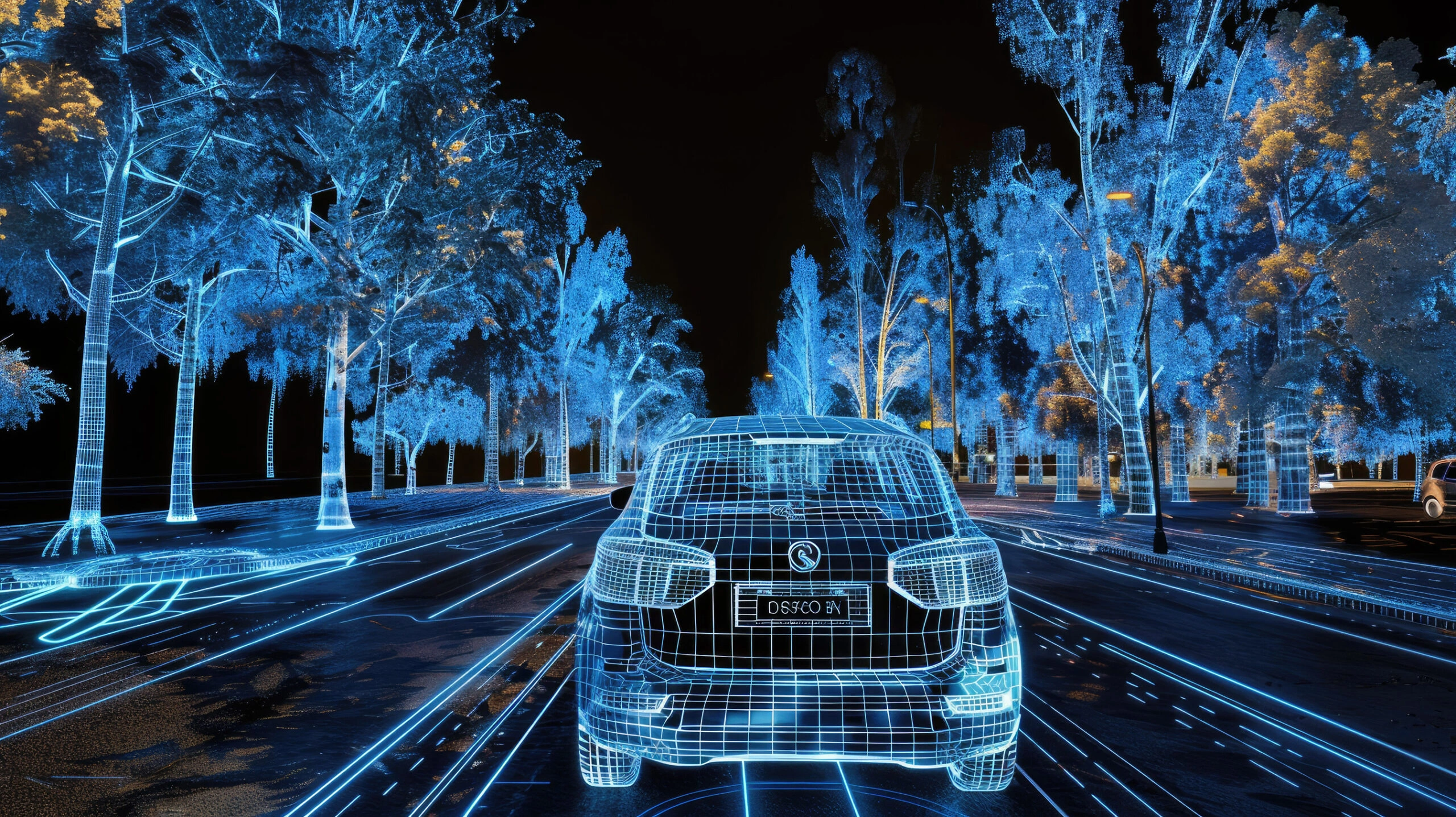
Humanoid robots are the current hardest problem in robotics data. Teaching a robot to generalize across the full range of tasks a human might do, in environments built for humans, requires whole-body motion data, multi-step demonstrations, and human interaction sequences at a scale that most projects haven't planned for.
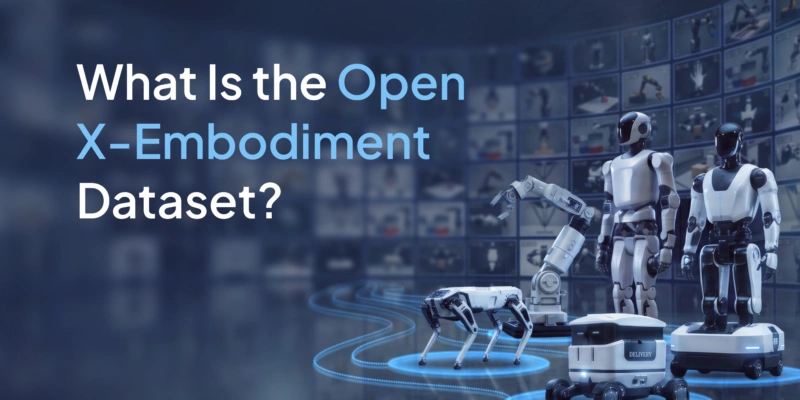
The Open X-Embodiment dataset — 22 robot embodiments, over one million task episodes, assembled by Google DeepMind and 33 research institutions — represents where the field currently is on cross-embodiment training data [9]. It's a research benchmark, not a template to copy, but it illustrates the data scale that general-purpose manipulation actually requires.
What Three Questions Should You Answer Before Committing to a Collection Method?
Before committing to a collection method, these three questions consistently produce faster alignment than any framework:
- What's the failure mode you can least afford? Safety failure in surgical robotics demands different data coverage than task failure in logistics. Prioritize data that covers the precursor states to the failure that matters most.
- How variable is the deployment environment? Fixed and controlled favors controlled collection. Variable and unpredictable favors crowdsourcing. The answer to this question often determines your entire collection strategy.
- What annotation accuracy floor does the task require? Below some threshold, the model cannot learn the task regardless of data volume. Set that number before designing the annotation pipeline, not after the first round of training fails.
How Do You Build a Data Pipeline That Doesn't Break at Scale?
A robotics data pipeline is a loop, not a linear process. Collect, process, annotate, validate, train, deploy, monitor, then collect again based on what deployment revealed. Teams that treat it as a one-time ETL job rebuild it under time pressure six months later.
Three things that reliably collapse pipelines at scale: no unified format standard across collection rigs (every session needs reconciliation before annotation can start), no automated quality gate before data reaches annotators (they spend time on unusable recordings), and no mechanism to route deployment failures back into the training distribution.
How Do You Handle Multiple Sensor Streams Without Creating Format Chaos?

Format decisions made before the first collection session determine how much reconciliation work every subsequent session requires. Change them after 50 sessions and you're reprocessing everything.
Store raw sensor data with per-modality timestamps in a format that keeps alignment metadata intact — ROS 2 bag files or HDF5 with synchronized timestamp indices are the standard [10]. Define coordinate frame conventions once across all collection rigs; anything that captures data in a different frame convention creates a conversion step that accumulates errors.
Preprocessing — point cloud downsampling, depth map generation, image rectification — is parallelizable. There's no reason to run it sequentially once data volume reaches the terabyte range. Distributed frameworks like Ray handle this without significant infrastructure investment.
Keep raw data and processed derivatives as separate versioned assets. Preprocessing logic will change. When it does, you need to reprocess from raw — and you need to know which version of processed data any given model was trained on.
What Does a Deployment Feedback Loop Actually Look Like?
The highest-signal data in a robotics project usually comes after deployment, not before. Production robots encounter distribution conditions that no simulation or controlled collection predicted.

What to log at minimum: model confidence on each inference, task completion events and failures, and any manual operator interventions. Low-confidence frames and failure episodes are annotation candidates — not for a scheduled review cycle, but automatically routed to the annotation queue as they accumulate. The gap between "model is uncertain here" and "model gets retrained on this" should be days, not quarters.
Before any retrained model goes back to hardware, validate it against the failure cases that triggered retraining — with human review, not just automated metrics [11]. A model that fixes the regression you collected data for sometimes breaks something else. Version every model, keep rollback capability. For safety-critical deployments, "revert within minutes" is the requirement, not a nice-to-have.
What's Actually Shifting in Robotics Data Right Now?
The structural change underway is that foundation models are redistributing where data effort goes, not reducing it. Large models pre-trained on web-scale vision and language, then fine-tuned on robot demonstrations, need fewer task-specific demonstrations than training from scratch. RT-2 showed this for vision-language-to-action transfer [12]; π0 (Physical Intelligence, 2024) demonstrated that a diffusion-based VLA model pre-trained across many tasks could be fine-tuned to new skills with minimal additional data [13].
What this means practically: the demonstration data you collect is becoming more valuable, not less. Pre-training commoditizes generic perception; task-specific demonstrations remain the differentiating input. Teams with the infrastructure to collect high-quality demonstrations efficiently will have an advantage as foundation models become the standard training paradigm.
Five things shifting the robotics data landscape in 2025–2026:

- Self-supervised learning is reducing per-label annotation requirements for perception by deriving training signal from raw sensor structure — models like MAE learn spatial representations from unlabeled video, cutting the labeled data volume needed for downstream tasks [14]
- VLA models — RT-2, π0, OpenVLA — are making cross-task generalization from demonstrations tractable; the implication for data teams is that breadth of demonstration scenarios now matters as much as depth within a single task [12] [13] [21]
- Open X-Embodiment changed what "starting from scratch" means — 22 robot types, one million+ episodes, openly available; teams that fine-tune from this foundation need substantially fewer task-specific demonstrations than those training from scratch [9]
- LeRobot (Hugging Face, 2024) ships working implementations of Diffusion Policy, ACT, and data collection tooling in a single library — the practical effect is that a team can go from zero to a running imitation learning experiment on real hardware in days rather than weeks [16]
- Federated learning across robot fleets is moving from research to engineering problem — the core challenge isn't the algorithm, it's building collection infrastructure that keeps raw environment data local while aggregating model updates centrally [17]
Which Tools Are Actually Worth Your Time Right Now?
Identify your bottleneck first. The tool that solves a problem you don't have doesn't help.
Annotation throughput is your bottleneck: for 3D point clouds, use CVAT — it's purpose-built for that format. Label Studio remains the most flexible open-source option for the rest of your multi-modal robotics annotation — video sequences, text, audio, custom schemas, and active community maintenance . Both tools plug into most ML pipelines without significant custom work.
Synthetic data volume is your bottleneck: Isaac Lab handles GPU-accelerated simulation with domain randomization at training scale — thousands of parallel environments on a single cluster [18]. MuJoCo is still the academic standard for benchmarking and physics-accurate manipulation work [19].
Imitation learning is your primary training paradigm: Diffusion Policy and ACT are the current baselines — both have demonstrated strong results on real hardware with modest demonstration budgets, and LeRobot has well-maintained implementations of both [15] [20] [16].
One consistent warning: annotation tools built for 2D static image labeling and extended to robotics almost always have weak temporal synchronization support. The workarounds accumulate into a maintenance burden that outweighs the initial convenience.
Conclusion
Hardware and model architecture decisions get most of the attention in robotics projects. Data decisions get made later, under time pressure, with whatever budget is left. That sequencing produces most of the expensive failures we see.
The teams that ship reliable robot learning systems define data strategy alongside model strategy, not after. They know before collection starts which failure modes matter, what annotation accuracy those require, and what a feedback loop from deployment looks like. Everything else — architecture, tooling, pipeline infrastructure — follows from that.
If you're working through what your project actually needs — how to scope a demonstration collection setup, what annotation accuracy a specific task requires, how to structure a pipeline that improves as the robot accumulates deployment experience — that's the work we do at Unidata.
- AI Training
- Robotics
- Data Annotation
- Python
- AWS

Frequently Asked Questions (FAQ)
Robot training data falls into three categories: raw sensory data (camera frames, LiDAR point clouds, audio), low-level cyclic data (joint states, motor torques, control signals sampled at 30–1000 Hz), and task-level telemetry (full episode recordings with success/failure labels). Most production systems use all three. The right mix depends on whether the robot is learning perception, low-level control, or task-level behavior.
Simulators approximate the deployment environment; they don’t reproduce it. The failure modes that appear on real hardware — contact slip, reflective surfaces, sensor bias — often only show up in real-world recordings. Synthetic pre-training is valuable for coverage and scale, but fine-tuning and validation on real data is necessary before any physical deployment.
The sim-to-real gap is the core problem: policies trained entirely in simulation encounter distribution shifts when deployed on hardware. Contact dynamics, material friction, and sensor noise are the most consistent failure points. Domain randomization reduces the gap but doesn’t eliminate it — for safety-critical applications, real-world validation data is required regardless of synthetic training volume.
It depends heavily on task complexity and training method. Narrow manipulation tasks can reach useful performance with 50–200 demonstrations using Diffusion Policy or ACT [15] [20]. General-purpose manipulation at scale is a different order of magnitude — the Open X-Embodiment dataset, assembled as a starting point for cross-embodiment pre-training, covers over one million episodes across 22 robot types. [9] Foundation models are reducing per-task requirements, but the pre-training data requirement is itself substantial.
Three requirements that standard tools don’t handle well: temporal consistency (consistent object IDs across video frames, especially through occlusions), 3D spatial accuracy in point cloud labeling, and timestamp-level synchronization across sensor modalities. For imitation learning, task phase labels and operator intent annotations are also required. A 2D image labeling tool repurposed for robotics will produce datasets with systematic synchronization errors.
Synthetic data is generated in simulation: fast, cheap, scalable, no privacy concerns, automatic ground truth labels. Real data is collected from physical robots in actual environments: higher fidelity to deployment conditions, slower and more expensive to collect, requires manual annotation. Synthetic data is best for pre-training and edge case generation; real data is best for fine-tuning and validation. Hybrid pipelines outperform either source alone.
Demonstrations are the primary training input for imitation learning — the robot learns to replicate operator behavior rather than optimizing a reward function. Captured via teleoperation, kinesthetic teaching, or motion capture, they’re processed into observation-action pairs for policy training. Coverage across starting conditions and recovery behavior matters more than raw demonstration count — identical demonstrations from the same start position produce policies that fail the moment conditions shift.
Reinforcement learning trains on simulated interactions with a defined reward function — data is generated, not collected. Imitation learning requires human demonstrations with episode-level annotation — the data pipeline centers on collection rigs and annotation of recordings. Supervised learning for perception requires labeled sensor data: frames, point clouds, object and pose annotations. Most production systems combine paradigms, which means the data pipeline needs to handle multiple formats and annotation schemas simultaneously.
Further Reading & References:
- [1] Kroemer, O., Niekum, S., & Konidaris, G. A Review of Robot Learning for Manipulation — Journal of Machine Learning Research — 2021
- [2] Pierson, H. A., & Gashler, M. S. Deep Learning in Robotics: A Review of Recent Research — Advanced Robotics — 2017
- [3] Peng, X. B., et al. Sim-to-Real Transfer of Robotic Control with Dynamics Randomization — ICRA — 2018
- [4] Tobin, J., et al. Domain Randomization for Transferring Deep Neural Networks from Simulation to the Real World — IROS — 2017
- [5] Andrychowicz, M., et al. Learning Dexterous In-Hand Manipulation — International Journal of Robotics Research — 2020
- [6] Argall, B. D., et al. A Survey of Robot Learning from Demonstration — Robotics and Autonomous Systems — 2009
- [7] Liao, Z., et al. A Survey on Data Collection for Machine Learning — IEEE Transactions on Knowledge and Data Engineering — 2022
- [8] Tkachenko, M., et al. Label Studio: Data Labeling Software — Heartex Inc. — 2020
- [9] Padalkar, A., et al. Open X-Embodiment: Robotic Learning Datasets and RT-X Models — CoRL — 2023
- [10] Quigley, M., et al. ROS: An Open-Source Robot Operating System — ICRA Workshop on Open Source Software — 2009
- [11] Amodei, D., et al. Concrete Problems in AI Safety — arXiv — 2016
- [12] Zitkovich, B., et al. RT-2: Vision-Language-Action Models Transfer Web Knowledge to Robotic Control — CoRL — 2023
- [13] Black, K., et al. π0: A Vision-Language-Action Flow Model for General Robot Control — Physical Intelligence — 2024
- [14] He, K., Chen, X., Xie, S., Li, Y., Dollár, P., & Girshick, R. Masked Autoencoders Are Scalable Vision Learners — CVPR — 2022
- [15] Chi, C., et al. Diffusion Policy: Visuomotor Policy Learning via Action Diffusion — IJRR / RSS — 2023
- [16] Cadène, R., et al. LeRobot: State-of-the-Art Machine Learning for Real-World Robotics — Hugging Face — 2024
- [17] McMahan, B., et al. Communication-Efficient Learning of Deep Networks from Decentralized Data — AISTATS — 2017
- [18] NVIDIA. Isaac Lab: GPU-Accelerated Robot Learning — NVIDIA Developer — 2024
- [19] Todorov, E., Erez, T., Tassa, Y. MuJoCo: A Physics Engine for Model-Based Control — IROS — 2012
- [20] Zhao, T., et al. ACT: Action Chunking with Transformers for Robotic Manipulation RSS 2023
- [21] Kim, G., et al. OpenVLA: An Open-Source Vision-Language-Action Model for General Robot Control arXiv 2024