
The Task
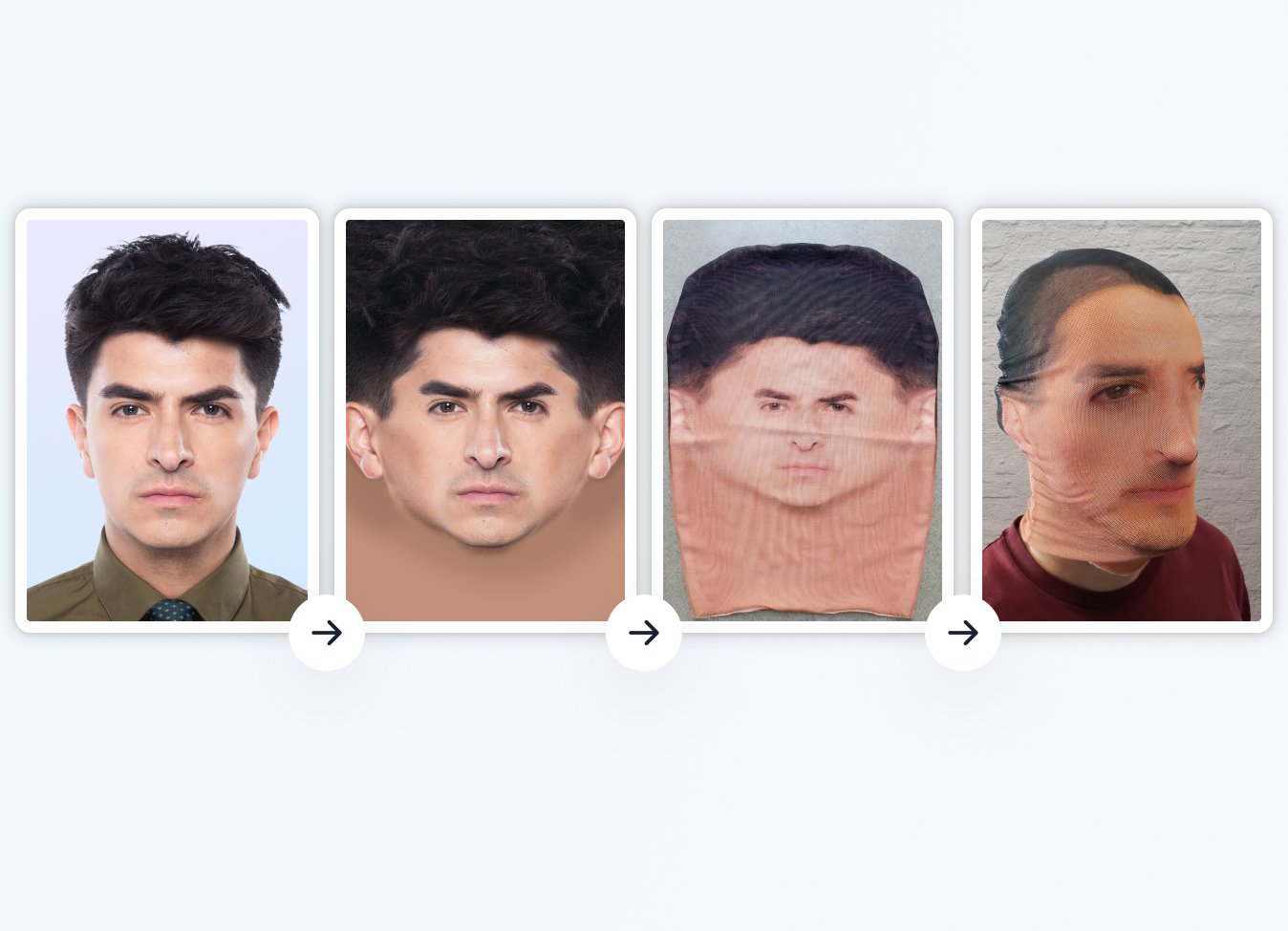
The goal was to create fabric masks that accurately mimic human facial features for biometric testing. Standard masks typically cover only the front of the face (180°), but our dataset required full coverage, including the back and sides, so respondents could move naturally without compromising data integrity.
Key requirements included:
- Full head contour for multi-angle recognition
- High-quality, realistic prints with modular replaceable features (eyes, nose, mouth)
- Material flexibility, including thinner fabrics similar to nylon hosiery for enhanced biometric testing accuracy
The Solution
-
- 01
-
3D Design and Production
We developed a 3D breakdown of the head structure to guide the supplier. This allowed:
- Integration of fabric with complete head coverage
- Customizable inserts for facial features to increase realism
- Post-production assembly that preserves the head’s natural shape
-
- 02
-
Material Selection and Printing
Different fabrics were tested, including lightweight, semi-transparent options, which better simulate skin and allow anti-spoofing testing. Prints were optimized for:
- Hyper-realistic textures and pigmentation, including micro-details like freckles or subtle wrinkles
- Multi-layered construction for durable, realistic results
-
- 03
-
Process Optimization
Even with a capable supplier, fabric mask production involves scaling challenges. We:
- Standardized instructions for assembly and quality control
- Monitored consistency across samples and materials
- Ensured flexibility to swap parts for live testing scenarios
The Result
Successfully produced initial samples for early-stage testing with full head coverage
Created a scalable workflow for future production of hyper-realistic fabric masks
Established expertise in multi-angle, realistic mask fabrication for biometric validation